Absolutely. Many homeowners combine motorized roll-downs on large or second-story openings with manual accordion or Bahama shutters elsewhere. A professional installer can design a balanced plan that meets your aesthetic and functional needs.


by
Share
Life in Southwest Florida means stunning sunsets, open lanais, and year-round outdoor living — but also the annual reality of hurricane season.
For homeowners in Naples, Marco Island, Estero, and Bonita Springs, hurricane shutters aren’t just an upgrade — they’re a necessity.
Whether you’re building a new home or upgrading older protection systems, understanding the different types of shutters, their benefits, and maintenance requirements can help you make the best decision for your property and budget.
Hurricane shutters are engineered barriers that shield windows and doors from flying debris, wind pressure, and water intrusion during storms. In addition, they prevent costly damage and make your home easier to insure.
They’re tested to meet strict wind-load standards and are approved by the Florida Building Code and often the Miami-Dade Notice of Acceptance (NOA) — two benchmarks for storm safety.
Properly installed shutters help:
There are several popular types used across Florida, each offering a different balance of protection, convenience, and cost.
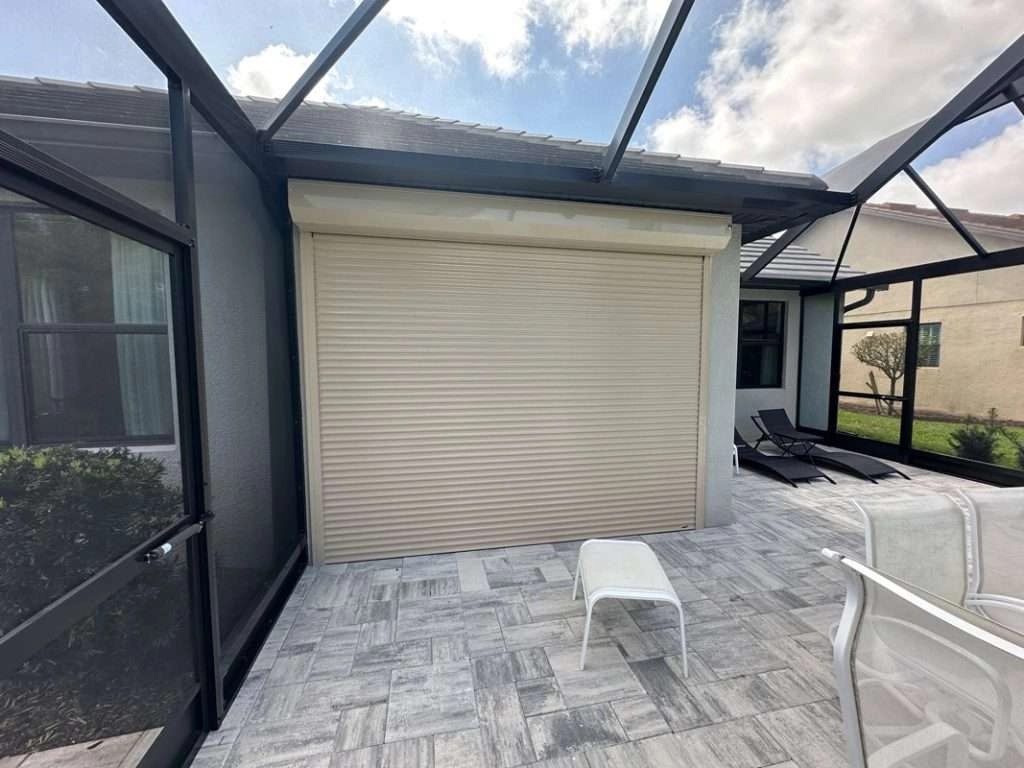
Hurricane shutters protect vulnerable openings and prevent costly storm damage.
The best hurricane shutters aren’t necessarily the most expensive — they’re the ones properly engineered and installed for your specific home. However, quality materials and professional installation make a significant difference in long-term reliability.
Key quality indicators:
Wind Safe only installs code-compliant, Florida-tested products, ensuring your home is protected to the highest standard.
Florida law requires most shutter installations to include:
These steps ensure your shutters meet state and local wind zone requirements (up to 180+ mph in Collier and Lee Counties). All products installed are tested to Miami-Dade County Product Control standards for hurricane protection.
Skipping these steps can result in insurance denial or resale complications later.
Our Wind Safe team handles all permitting, documentation, and HOA submittals — start to finish — so you never have to worry about compliance.
When selecting your shutter system, consider:
Most Florida homeowners benefit from a combination — for example, motorized roll-downs on key exposures and manual accordions elsewhere.
Not sure whether to invest in shutters or upgrade to impact windows? Read our full comparison on Impact Windows vs. Hurricane Shutters
Routine maintenance ensures your shutters stay storm-ready and corrosion-free.
Proper care can extend your shutters’ lifespan to 20+ years.
Choosing a local, licensed contractor is essential for code compliance and warranty support. Moreover, local expertise means your shutters are designed for Southwest Florida’s unique conditions.
Wind Safe is licensed, insured, and based in Naples, serving Collier and Lee Counties with professional installation, service, and maintenance.
Don’t just take our word for it — see what local homeowners have to say on our Testimonials page.
We’re more than a shutter company — we’re your long-term hurricane protection partner.
Florida’s storm seasons are unpredictable — but your preparedness doesn’t have to be. By investing in quality hurricane shutters, you’re securing your home, your family, and your future.
Call Wind Safe at 239-331-8761 or Contact Us to schedule your free consultation today.
Florida law doesn’t require shutters statewide, but local building codes in coastal counties do require compliant storm protection for new construction and major remodels. Homeowners without shutters may still install them voluntarily for safety and insurance savings.
Accordion shutters are manually operated and fold across the opening on a track, while roll-down shutters retract vertically into a housing box and can be motorized. Roll-downs provide faster, easier deployment and a more streamlined look.
Homeowners should operate and inspect shutters at least once per year, ideally before hurricane season. Lubricate moving parts, clear debris, and schedule a professional inspection every 1–2 years to ensure smooth operation.
Yes. Many insurers offer wind-mitigation credits for approved shutters. You’ll need a wind-mitigation inspection verifying your protection system meets code standards.
Absolutely. Many homeowners combine motorized roll-downs on large or second-story openings with manual accordion or Bahama shutters elsewhere. A professional installer can design a balanced plan that meets your aesthetic and functional needs.
About the Author

As the leader of Wind Safe Hurricane Protection, Conor sets the standard for quality, accountability, and long-term customer trust. Based in Naples, he takes a hands-on approach and is actively involved in day-to-day operations to ensure every hurricane protection system is properly engineered, professionally installed, and backed by a company that stands behind its work. Wind Safe proudly serves homeowners across Southwest Florida with premium shutters, screens, and impact windows designed for coastal conditions.